

Liquid Cooling
Zero-Drip Precision & Galvanic Isolation: 24/7 Protection for Mission-Critical Compute
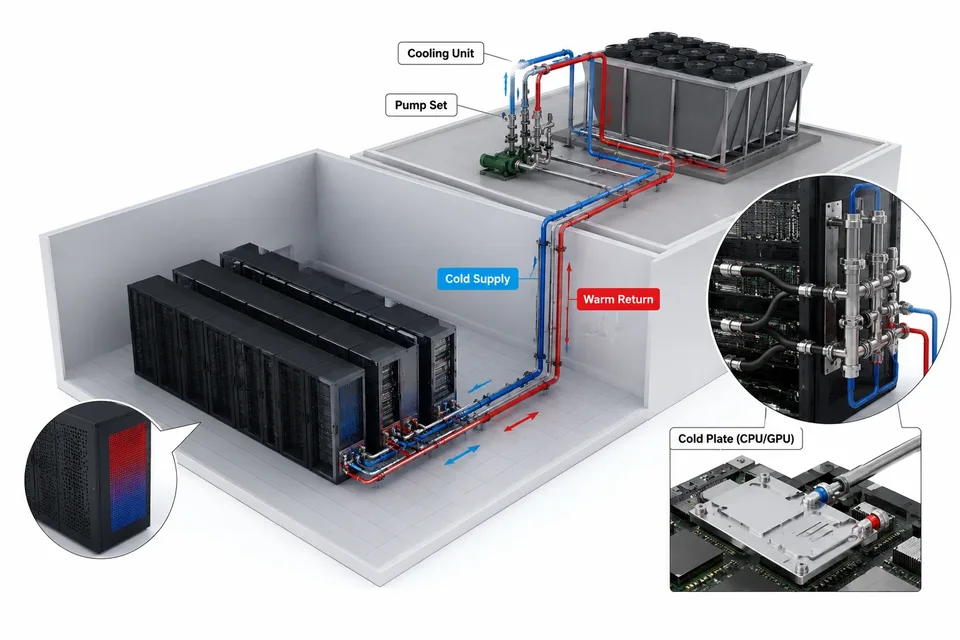
Process Challenges in Data Center Liquid Cooling
Next-generation AI supercomputers and GPU clusters generate immense thermal fluxes, with single-chip TDPs exceeding 700W–1000W. Direct-to-Chip (D2C) liquid cooling is mandatory. However, inside high-voltage server racks, even a single microscopic droplet of coolant can destroy millions in compute hardware. Furthermore, mixing brass or copper fittings with aluminum cold plates creates severe galvanic corrosion and metal ion leaching that clogs cooling microchannels. Secondary loops require high-purity 304/316L stainless steel manifolds tested to helium mass spectrometer leak standards.
Our Top Product Picks
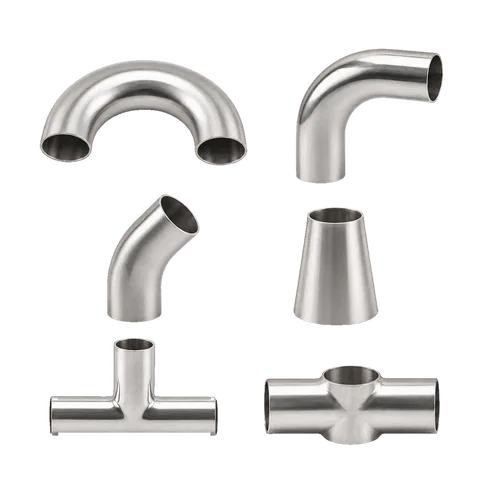
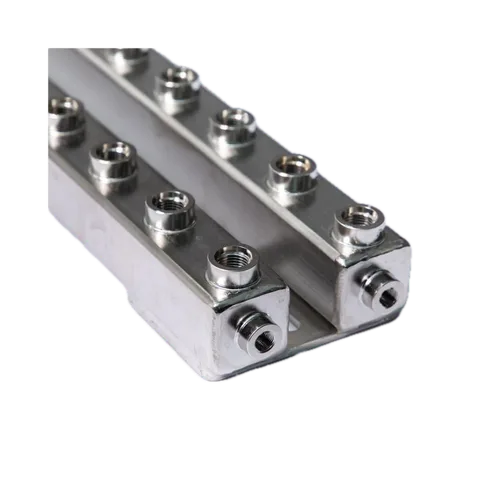
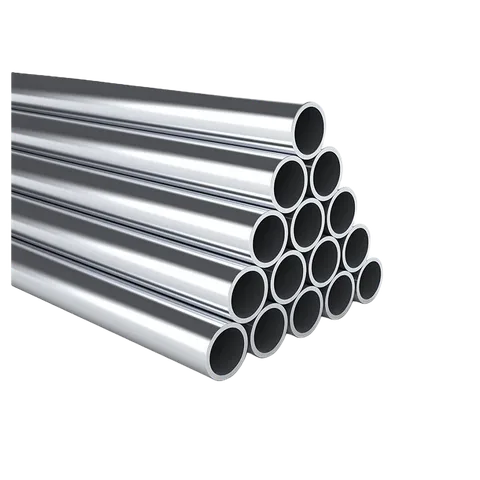
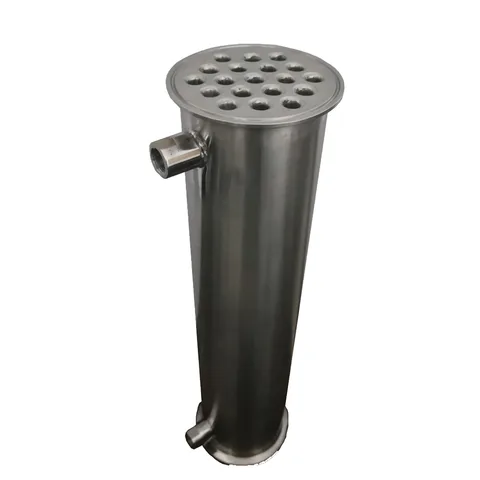
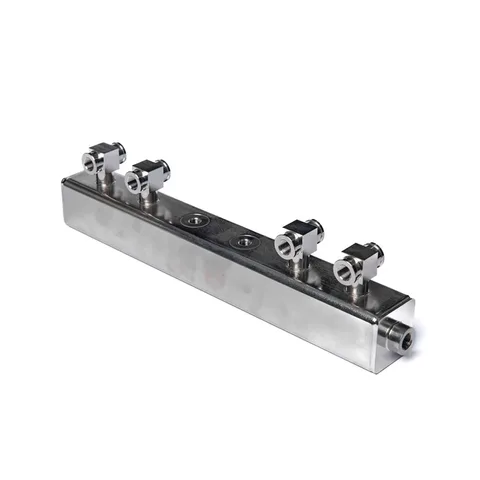
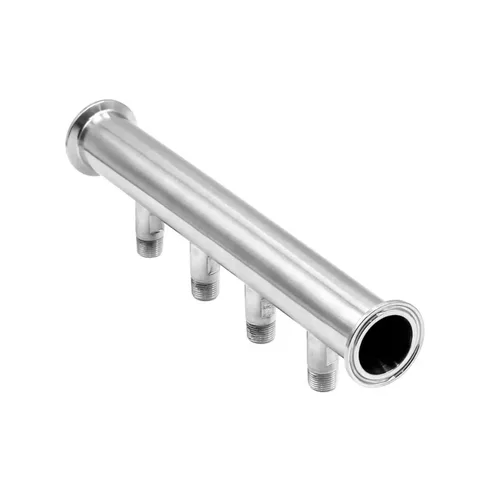
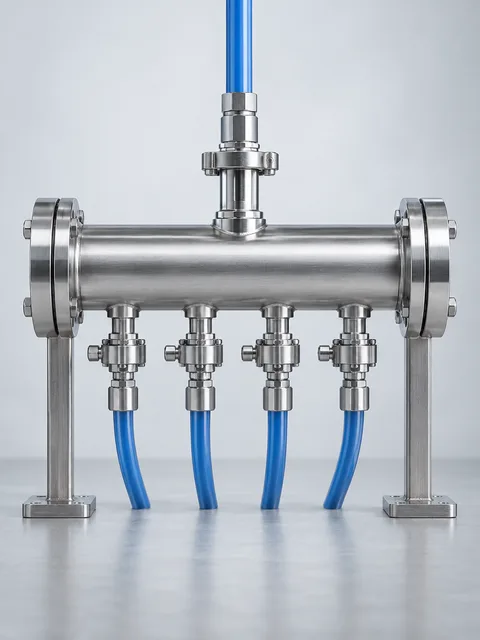
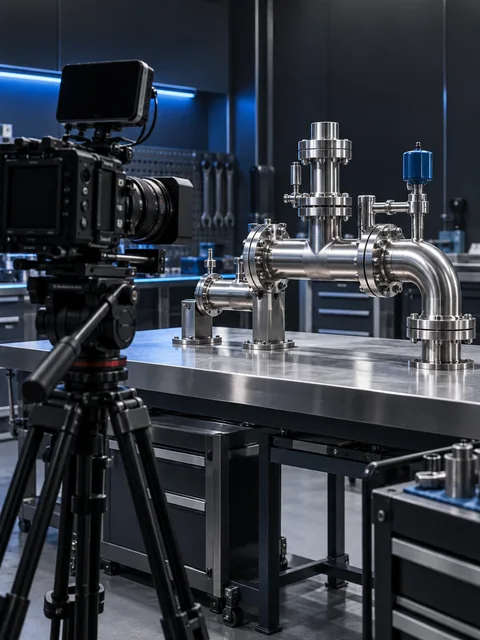
CNC-Drilled Server Rack Secondary Distribution Manifolds
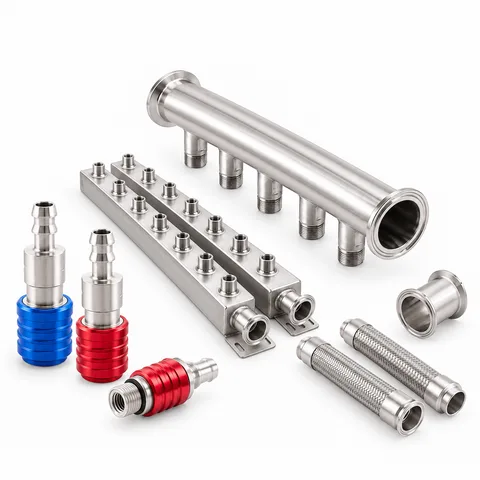
Precision orbital-welded 304/316L supply and return headers with computer-spaced branch ports, delivering balanced flow distribution and minimal pressure drop across 42U/48U high-density server blades.
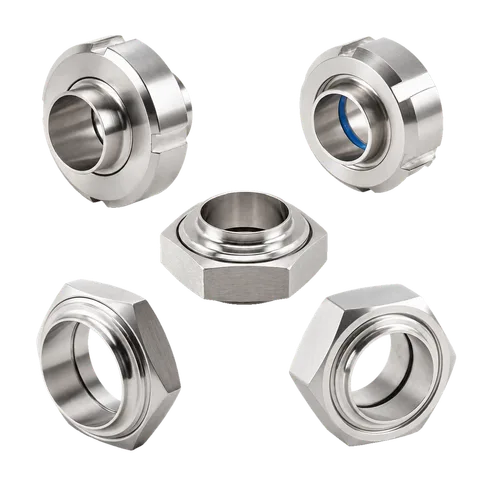
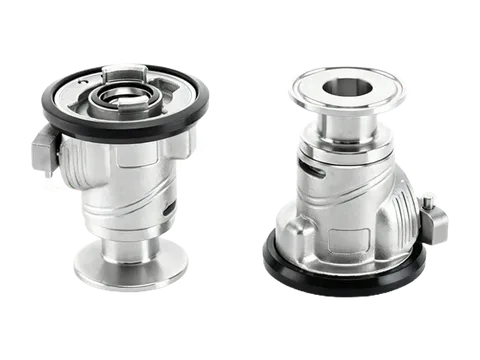
View custom server rack manifoldsNon-Spill Flush-Face Quick-Disconnect Adapters
Flush-face dry-break couplers allow live hot-swapping of server compute blades during full operation without releasing a single droplet of coolant or admitting air bubbles into the loop.
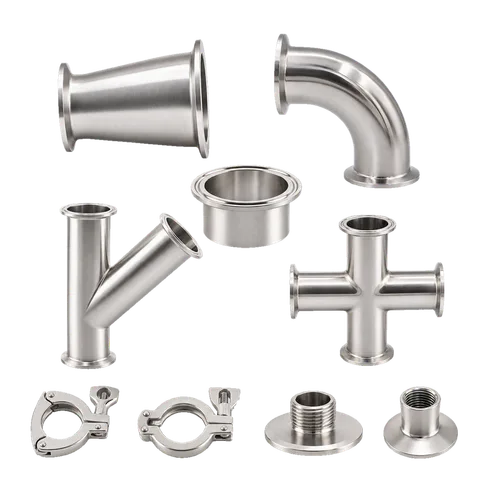
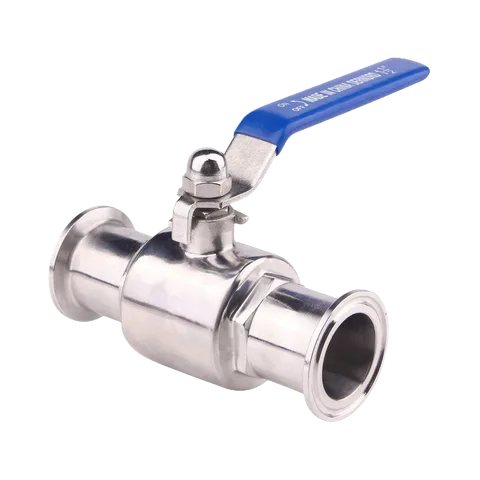
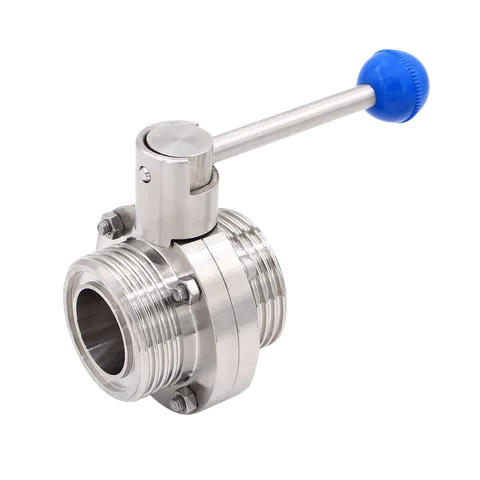
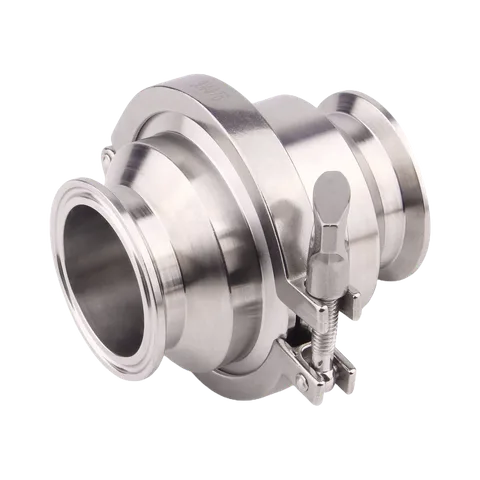
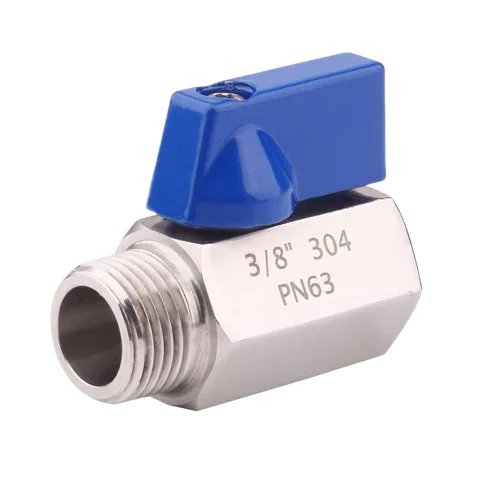
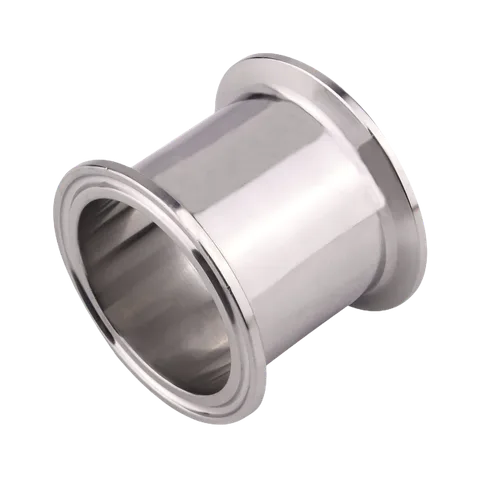
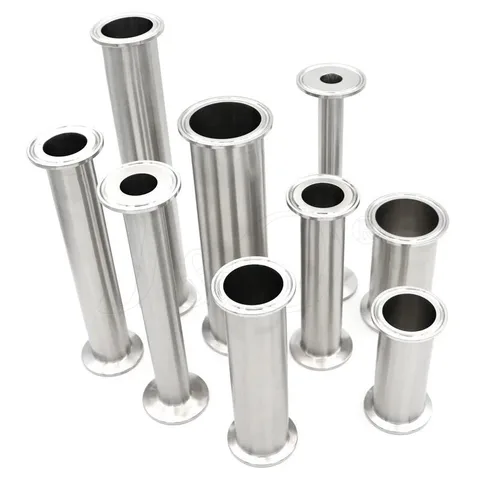
View dry-break disconnect fittingsCompact 316L CDU Valves & Small-Bore Sanitary Ferrules
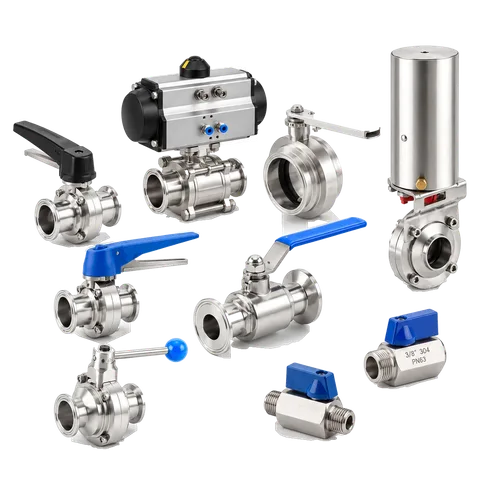
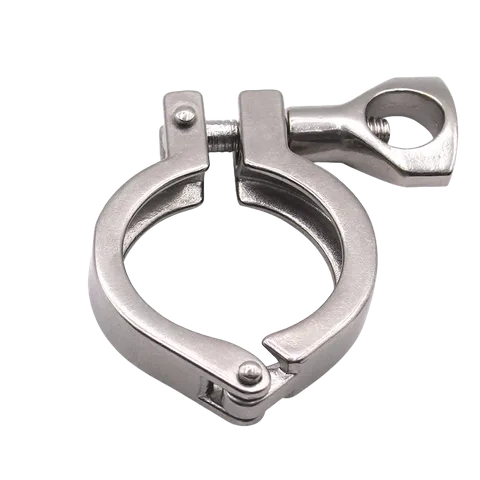
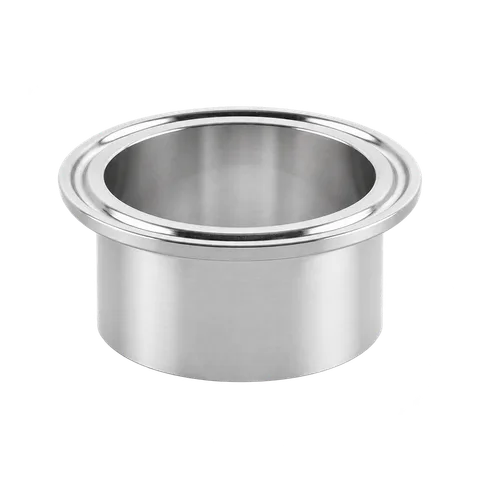
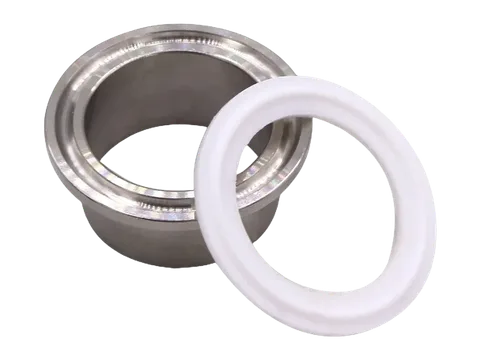
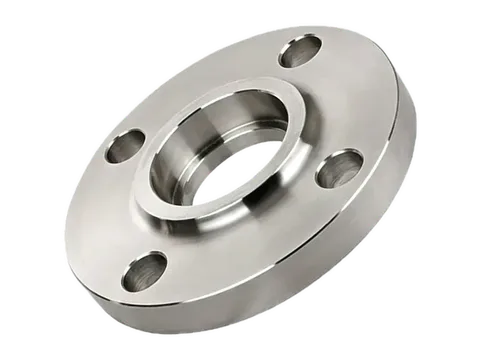
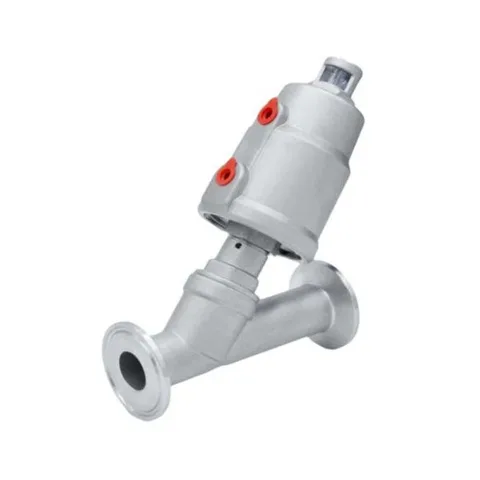
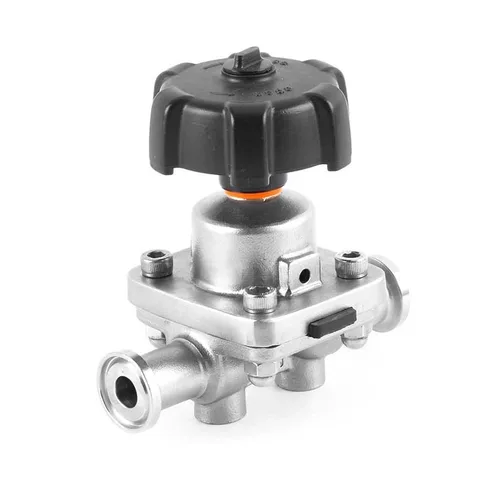
Space-saving 316L stainless ball valves, check valves, and miniature clamp adapters engineered specifically for tight internal CDU cabinet packaging, compatible with DI water and PG25/PG50 coolants.
View compact CDU valve & fitting solutionsPros & Cons for Your Process
【Stainless Manifolds】 Zero Galvanic Corrosion & Long Lifecycle
304/316L metallurgy prevents copper ion migration and aluminum cold-plate galvanic reaction. 20+ year design life with zero rust or coolant degradation.
Requires precision CNC machining and orbital TIG welding to guarantee uniform port spacing and planarity across 2-meter rack heights.
【Dry-Break Quick Disconnects】 Live Hot-Swap Servicing
Enables rapid maintenance and blade replacement without draining the rack or taking adjacent GPUs offline. Flush mating faces wipe clean in seconds.
Precision internal spring and seal mechanism adds hydraulic resistance; requires careful CFD sizing to balance loop pressure drop.
【100% Helium Mass Spectrometer Testing】 Mission-Critical Assurance
Detects microscopic leak rates down to < 1x10^-8 mbar·L/s, providing absolute confidence in live high-voltage data hall deployments.
Requires specialized cleanroom vacuum chamber testing, adding thorough QA time before final shipment packaging.
Regional Standards & Market Compliance
Engineered for regional piping codes across Australia, Europe, and Southeast Asia.
Helium Vacuum Mass Spec
100% chamber vacuum helium mass spectrometer leak testing verifying zero-drip integrity below 1x10^-8 mbar·L/s.
- Leak Rate: < 1x10^-8 mbar·L/s Vacuum Tested
- Hydrostatic: 1.5x Design Pressure Holding
- Cleanliness: Particle count verified ISO Class 7
High-Purity 304 & 316L
Eliminating brass and copper ion leaching that causes galvanic pitting on aluminum cold plates and clogs microchannels.
- Materials: AISI 304 / 316L Stainless Steel
- Coolants: Propylene Glycol (PG) & DI Water
- Surface: Electropolished Passivated
42U / 48U Open Compute (OCP)
Standardized mounting brackets and port spacings engineered for OCP Open Rack v3 and proprietary AI server form factors.
- Rack Height: 42U / 48U Standard Server Cabinets
- Branch Ports: G 1/4", G 3/8", G 1/2", NPT
- Quick Disconnect: Flush-face dry-break couplers
Technical Engineering FAQs
Practical engineering answers covering standards, metallurgy, cleaning cycles, and regional adaptation.
Why is stainless steel preferred over copper and brass in AI server liquid cooling loops?
Stainless steel (304/316L) completely eliminates galvanic corrosion risks when paired with aluminum/nickel cold plates, prevents heavy metal ion precipitation that clogs cold-plate micro-fins, and provides superior mechanical strength under continuous pump vibrations.
What leak testing protocols does Chelsey conduct on liquid cooling manifolds?
Every manifold undergoes 100% hydrostatic hold testing at 1.5x working pressure. For high-density mission-critical deployments, we offer helium vacuum mass spectrometer leak detection with thresholds down to 10^-8 mbar·L/s to guarantee absolute hermetic integrity.
Can Chelsey customize manifold length, branch count, and port spacing for specific server rack designs?
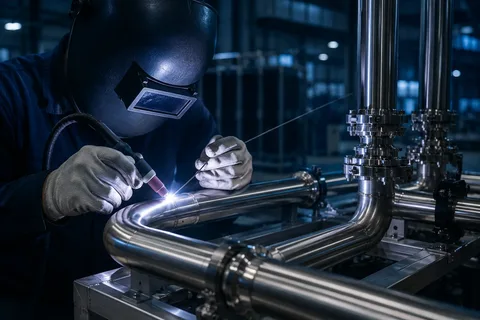
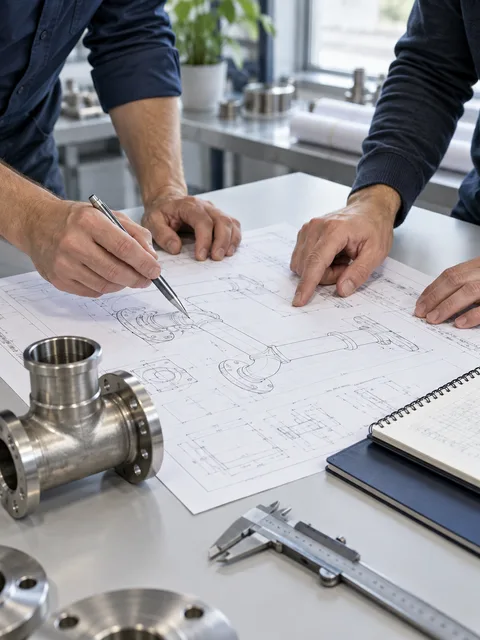
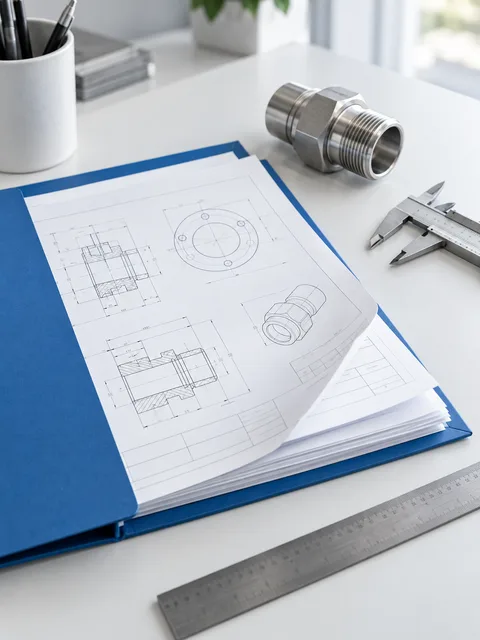
Yes. We provide complete OEM fabrication from 3D CAD step files. Our CNC milling, precision hole drilling, and automatic orbital TIG welding ensure consistent branch pitch and angle tolerances across high-volume production.
Which elastomer materials are recommended for water-glycol coolants?
Peroxide-cured EPDM is the industry benchmark for water-glycol secondary loops across operating temperatures from -30°C to +120°C, offering zero swelling and excellent elastic recovery. For specialized dielectric coolants, Viton (FKM) or PTFE seals are selected.
Ready to discuss your piping requirements?
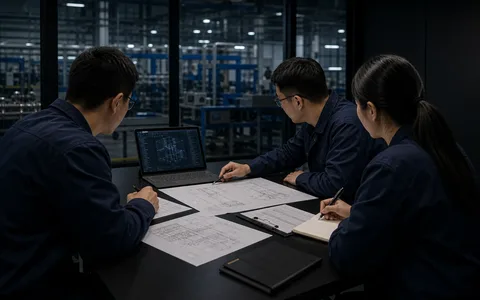
Send your CAD drawings, BOM schedules, or dimensional specifications for a rapid technical review and quotation.
Browse complete product catalog →